
Ecommerce Website Design for UK Businesses
An online shop that's easy for customers to use and practical for your business to manage.
Selling products online takes more than having a website with a shopping basket.
Your customers need to find products, understand what they're buying, choose the right options and complete their orders without unnecessary complications.
Your business also needs a way to manage products, payments, deliveries and the day-to-day work involved in running an online shop.
At DOT IT, we design and develop ecommerce websites for businesses across the UK.
Whether you're launching your first online store, moving from another platform or improving an existing ecommerce website, we can help you build a solution around your products and business requirements.
We work with platforms including Shopify and WooCommerce, as well as other suitable website technologies.
Our approach starts with understanding what you sell, how your customers shop and what you need the website to do.
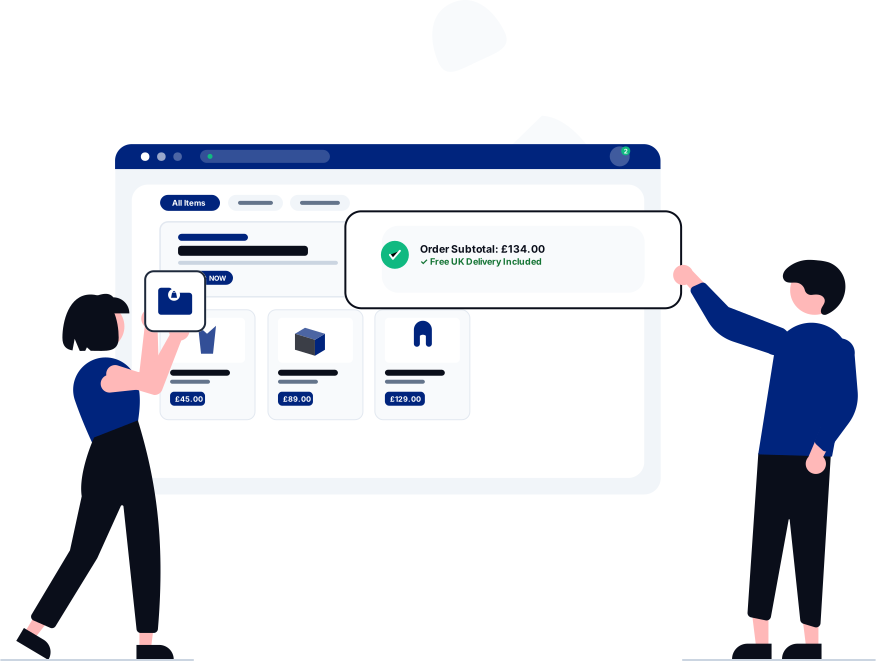
Ecommerce Websites Built Around How Your Business Sells
Every online business is different.
A clothing retailer may need customers to select sizes, colours and styles.
A furniture business might need detailed product specifications, delivery information and multiple product images.
A specialist supplier may have hundreds of products organised into categories with different purchasing requirements.
The right ecommerce website should reflect those differences.
We don't believe every online shop should follow the same structure.
Before designing your website, we discuss your products, customers, catalogue size and order management requirements.
We also consider how people will find products, compare options and move through the buying process.
The aim is to create an online store that makes sense for your business and the people shopping with you.
Our Ecommerce Website Design and Development Services
We help businesses plan, build and improve online shops based on their requirements through our web design and development services.
New Ecommerce Website Design
If you're starting an online business, we can help you create a store with the essential pages and functionality needed to sell your products.
We'll discuss the required features before development begins.
Custom Ecommerce Website Development
Some businesses need functionality that isn't available through a standard store setup. This might involve specialised product options, custom forms, integrations or other features. We can review your requirements and discuss suitable development options. The approach depends on the platform, technical complexity and how your business operates.
Ecommerce Website Redesign
Already selling online but unhappy with your website? You may need to improve the design, reorganise product categories or make the shopping experience easier to use. We can review your existing ecommerce website and discuss whether targeted improvements or a more substantial redesign would be appropriate.
Ecommerce Platform Migration
If your current ecommerce platform no longer meets your needs, we can help you explore moving to another solution. The process may involve products, collections, content, URLs, customer information and integrations. We'll review the available migration options and discuss the work required.
Ecommerce Website Support
Online shops often need updates after launch. You may need to introduce new products, change page layouts, update integrations or resolve technical problems. We can discuss additional development and ongoing support separately.
Ecommerce Website Design That Makes Shopping Straightforward
A good ecommerce website should help customers move from browsing to purchasing without unnecessary confusion.
Design plays an important role in that experience.
But it's not just about colours, images or visual effects.
The structure of the store, product information and functionality also matter.
Clear Navigation
Customers should be able to find relevant products without struggling through complicated menus. We consider how products should be organised and how customers are likely to browse your store.
Useful Product Categories
Categories help customers explore groups of products. The right category structure depends on your catalogue and how people search for the items you sell. We can discuss suitable categories, collections and filtering options.
Well-Designed Product Pages
A product page should give customers the information they need before making a decision. That may include product images, descriptions, specifications, pricing, variants and availability. We consider how these details are presented and how customers select the products they want.
Easy-to-Understand Shopping Basket
Customers should be able to review their selected products, quantities and relevant costs before proceeding. We consider the available basket functionality and how it fits into the shopping experience.
Practical Checkout Experience
Checkout should make it clear what customers need to do to complete their orders. The available design and configuration options depend on the ecommerce platform and payment setup. We can discuss suitable improvements within those capabilities and align with conversion optimisation principles.
Mobile-Friendly Ecommerce Website Design
Customers don't always shop from a desktop computer.
They may discover a product on their phone, compare options during a break or complete an order while travelling.
Your ecommerce website should be usable across different screen sizes.
We design responsive ecommerce websites and consider how important shopping features behave on mobile devices.
Mobile Navigation
Product categories and menus should be straightforward to use on smaller screens.
Product Images and Information
Customers should be able to view relevant product details without unnecessary difficulty.
Product Selection
Options such as size, colour and quantity should be practical to select on mobile devices.
Shopping Basket and Checkout
We consider the mobile shopping journey, including important buttons, forms and checkout interactions.
Readable Content
Product descriptions, delivery information and other details should be easy to read.
Mobile usability is considered during design and development rather than being treated as an additional feature after launch.
Shopify Ecommerce Website Development
Shopify is one option for businesses looking to sell products online.
It provides a hosted ecommerce platform with tools for managing products, orders, payments and other store activities.
We can help with Shopify website design and development based on your requirements.
This may include store setup, theme customisation, product organisation, integrations and redesign work.
Shopify may be suitable for businesses that prefer a managed ecommerce platform with built-in commerce features.
However, the right choice depends on your products, operational requirements and the flexibility you need.
If you're specifically looking for Shopify development, you can explore our dedicated Shopify Website Development service.
WooCommerce Website Design and Development
WooCommerce is an ecommerce solution built on WordPress.
It allows businesses to add online selling functionality to a WordPress website.
WooCommerce can be useful when you want to combine ecommerce with the content management and development flexibility of WordPress.
We can discuss WooCommerce website design and development, including product setup, store layouts, checkout configuration and relevant integrations.
WooCommerce Product Management
WooCommerce provides tools for managing products, categories and variations. We can help organise the catalogue around your business requirements.
Custom WooCommerce Design
Depending on the website setup, we can discuss custom layouts and design changes for product and shopping pages.
WooCommerce Integrations
Some stores need connections to payment providers, shipping tools or other business systems. We can discuss suitable options based on the tools involved.
WooCommerce Maintenance
WooCommerce websites may require ongoing attention to WordPress, plugins, themes, hosting and other technical components. Maintenance arrangements can be discussed separately.
Shopify vs WooCommerce: Which Should You Choose?
Both Shopify and WooCommerce can support ecommerce businesses, but they work differently.
Shopify provides a managed platform that handles much of the underlying hosting infrastructure.
WooCommerce runs within WordPress, with hosting and technical management depending on the chosen setup.
Shopify May Be Suitable If:
WooCommerce May Be Suitable If:
Neither platform is automatically the best option for every business.
We can help you understand the differences and discuss which approach suits your requirements.
Ecommerce Product Pages That Help Customers Make Decisions
Product pages are among the most important parts of an online store.
Customers use them to decide whether a product is suitable before placing an order.
The information required depends on what you're selling.
Product Photography
Clear product images help customers understand what they're buying. Depending on the product, you may need multiple views, close-up images or photographs showing the item in use.
Product Descriptions
Descriptions should explain relevant product features and details. The aim is to answer customer questions rather than fill the page with unnecessary marketing language.
Product Specifications
Some products require dimensions, materials, compatibility information or other technical details. We can discuss how these should be organised and displayed.
Product Variants
Products may be available in different sizes, colours or configurations. We can help implement supported selection options.
Delivery and Returns Information
Customers may want to understand delivery costs, estimated times and returns arrangements before purchasing. We can help organise this information within the website using details supplied by your business.
Customer Reviews
Genuine product reviews can help customers understand other buyers' experiences. If reviews are relevant to your store, we can discuss suitable supported features and integrations.
Ecommerce Payment Gateway Integration
Customers need a way to pay for their orders.
The payment options available depend on your ecommerce platform, business location, provider eligibility and other requirements.
We can help discuss suitable payment gateway integrations.
Depending on the platform, options may include card payments, digital wallets and other supported payment methods.
Payment processing is generally handled by the relevant provider.
We can assist with the agreed technical setup, while provider fees, verification requirements and account approval remain subject to the provider's terms.
Secure Payment Handling
Payment security is an important consideration for ecommerce websites.
We favour supported payment integrations and established platform capabilities rather than introducing unnecessary handling of sensitive payment information.
The exact responsibilities depend on the chosen payment provider and technical setup.
Ecommerce Shipping and Delivery Setup
Delivery requirements can affect how your online store needs to be configured.
A business selling small products throughout the UK may have different needs from a retailer delivering large or fragile items.
We can discuss the delivery arrangements your store needs to support.
UK Shipping Rates
Your business may need fixed delivery charges, order-value thresholds or other supported shipping rules.
Delivery Zones
You may offer different delivery options depending on the customer's location.
Local Collection
Some retailers want customers to collect orders from a physical location. We can discuss suitable collection features where supported.
Shipping Integrations
Depending on your platform, third-party shipping tools may be available. We can review relevant integration requirements.
Delivery Information
Customers should be able to understand your delivery arrangements before placing an order. We can help organise the information you provide.
Ecommerce Website Design With SEO Foundations
An ecommerce website needs to be understandable to both customers and search engines.
However, simply launching an online store doesn't guarantee organic traffic.
Search performance depends on competition, content, product demand, website structure and other factors.
We consider relevant SEO foundations during ecommerce website development.
Product Category Structure
Clear categories can help customers find products and support a logical website structure.
Product Page Content
Useful product information can help visitors understand the items you're selling. Where appropriate, original descriptions can also help distinguish your pages from generic manufacturer content.
Page Titles and Metadata
We can implement relevant titles and descriptions for agreed pages.
Internal Linking
Links between product categories, products and supporting content can help visitors discover related information.
Image Optimisation
We consider suitable image sizes, formats and descriptive alternatives where relevant.
Technical SEO
We can discuss crawlability, indexing, canonical URLs, redirects and other technical considerations as part of the project.
Ecommerce Content
Buying guides, product comparisons and other genuinely useful resources may support a broader ecommerce SEO strategy. Ongoing SEO services can be discussed separately.
Ecommerce Website Speed and Performance
Customers expect websites to respond when they browse products or interact with shopping features.
Slow pages and technical problems can make the experience frustrating.
Ecommerce performance depends on several factors, including hosting, product images, themes, scripts and integrations.
We consider these factors during design and development.
Image Handling
Large product images may affect page loading. We can discuss suitable image optimisation without unnecessarily compromising product presentation.
Theme and Design Choices
Some layouts and effects introduce more complexity than others. We consider whether particular design elements are useful to the customer experience.
Third-Party Integrations
Apps and plugins can add useful functionality, but they may also introduce additional scripts or dependencies. We consider the implications of the agreed integrations.
Platform Requirements
Different ecommerce platforms have different performance characteristics and technical limitations. We recommend approaches based on the chosen technology and project requirements.
Ecommerce Website Redesign Services
An online store may need redesigning as your business grows.
Your product range might have changed.
The original design may no longer represent your brand.
Customers may find the navigation confusing, or important product information may be difficult to locate.
We can review the existing store and discuss improvements.
Updating the Store Design
A redesign can help create a more consistent appearance across your homepage, categories and product pages.
Improving Product Navigation
We can review how customers browse and discover products.
Reviewing Mobile Usability
Mobile layouts and interactions may need improvement.
Improving Product Information
Product pages may benefit from clearer descriptions, specifications and purchasing options.
Addressing Technical Issues
Existing integrations or functionality may need reviewing.
Not every ecommerce website requires a complete rebuild.
We'll discuss whether targeted changes or a broader website redesign makes more sense.
Ecommerce Website Migration
Moving an existing online store to another platform can involve more than transferring product information.
Your current website may contain product URLs, customer data, order records, images, content and integrations.
Some information can be migrated using supported tools, while other elements may require additional work.
We can help review the requirements and plan an appropriate approach.
Product Data
We consider how products, variants, images and categories can be transferred.
Website Content
Important pages and other content may need to be recreated or migrated.
Existing URLs and Redirects
If your current store receives search traffic, URL changes should be planned carefully. We can discuss redirects and other relevant SEO considerations.
Customer and Order Data
The available transfer options depend on the source and destination platforms, data formats and privacy requirements.
Testing
We review the agreed store functionality before launch.
Migration projects are scoped according to the platforms involved and the information that needs to be transferred.
Ecommerce Websites for Different Types of Businesses
Different product categories create different website requirements.
We design ecommerce websites around the products being sold and the customers purchasing them.
Fashion and Clothing Stores
These websites may need size and colour variations, product photography, collections and filtering.
Home and Furniture Stores
Customers may need detailed dimensions, materials, delivery information and multiple product images.
Beauty and Personal Care Stores
Product information, variations and clear category organisation may be important.
Electronics and Accessories
Specifications, compatibility information and product comparisons can help customers make decisions.
Specialist Retailers
Businesses selling niche products may need custom product structures or additional functionality.
Small Independent Retailers
A smaller retailer may benefit from a straightforward store that's manageable without unnecessary complexity.
The features required depend on the business rather than the industry label alone.
How Much Does an Ecommerce Website Cost in the UK?
Ecommerce website development costs vary depending on the store's size, design and functionality.
A small online shop with a limited product range will have different requirements from a larger store with complex product options and integrations.
Some factors that influence the cost include:
You may also need to consider ongoing costs such as platform subscriptions, hosting, payment processing, premium themes and third-party applications.
At DOT IT, we prepare ecommerce website development quotes based on your requirements.
We'll discuss what your store needs before recommending a suitable approach.
Our Ecommerce Website Design Process
We keep the process clear from planning through to launch.
Understanding Your Business
We discuss what you sell, who your customers are and how you want your online store to operate.
Planning the Store
We consider product categories, pages, design requirements, payment options, delivery arrangements and integrations.
Choosing the Platform
We discuss Shopify, WooCommerce or another suitable solution based on your requirements.
Designing the Website
We plan the visual experience, including important pages, product layouts and mobile usability.
Ecommerce Development
We build the agreed functionality and configure the relevant store features.
Testing and Review
We review important customer journeys and supported checkout functionality before launch.
Launch and Handover
Once the store is ready and approved, we help with the agreed launch process. We can also discuss how your team will manage products and other website content.
Ecommerce Website Maintenance and Support
Online stores change over time.
You may introduce new products, update categories, add integrations or improve the shopping experience.
Some platforms also require ongoing software maintenance.
We can discuss support for product updates, design changes, technical issues and additional development work.
The exact requirements depend on your ecommerce platform and how the website has been built.
Ongoing maintenance and support are quoted separately.
Why Choose DOT IT for Ecommerce Website Design?
We Start With Your Business Requirements
We look at your products, customers and operational needs before recommending a platform or design approach.
Design and Development Together
Our team works across website design and development, helping us consider both the appearance and functionality of your store.
Experience With Different Platforms
We work with Shopify, WordPress and other website technologies. That gives us flexibility when discussing the right approach for your business.
Focus on Practical Shopping Experiences
We consider product discovery, navigation, product information and the steps customers take towards purchasing.
Clear Communication
You shouldn't need to understand technical terminology to know what's happening with your project. We explain the process and discuss important decisions in straightforward language.
Support Beyond Launch
If you need further improvements or ongoing support, we can discuss an appropriate arrangement.
Hear from businesses that trust DOT IT to power their growth.
Sayyid Aliraza Naqvi
Website, Branding
Gazi Varteji
Website Design, Devlopment
Thanushan
UI/UX, Web Devlopment
Leah Zimmerman
Website Devlopment
Robert
Website Devlopment
Kelly Roberts
Website + Lead Genration
Samrendra Srivastava
Video Creation
Sayyid Aliraza Naqvi
Website, Branding
Gazi Varteji
Website Design, Devlopment
Thanushan
UI/UX, Web Devlopment
Leah Zimmerman
Website Devlopment
Robert
Website Devlopment
Kelly Roberts
Website + Lead Genration
Samrendra Srivastava
Video Creation
Sayyid Aliraza Naqvi
Website, Branding
Gazi Varteji
Website Design, Devlopment
Thanushan
UI/UX, Web Devlopment
Leah Zimmerman
Website Devlopment
Robert
Website Devlopment
Kelly Roberts
Website + Lead Genration
Samrendra Srivastava
Video Creation
Frequently Asked Questions About Ecommerce Website Design
The cost depends on the platform, number of products, design requirements, integrations and functionality. We prepare tailored quotes based on the agreed project scope.
Let's Build Your Ecommerce Website
Whether you're starting a new online shop, moving to another platform or improving an existing store, we can help you plan the next steps.
Tell us what you're selling, how you want your website to work and what your business needs.
We'll discuss the design, platform and development requirements before preparing a tailored quote.
Ecommerce website design and development for businesses across the UK.