
Website Migration Services for UK Businesses
Moving your website shouldn't mean losing important pages, breaking customer journeys or creating unnecessary problems for your business.
There are plenty of reasons to move a website.
You might be switching from Wix to WordPress, moving your online shop to Shopify or changing hosting providers because your current setup no longer meets your needs.
Perhaps you're launching a redesigned website and want to keep the important content and URLs from your existing site.
Or you may have outgrown your current platform and need something that supports your business more effectively.
Whatever the reason, website migration requires planning.
A poorly managed move can result in broken links, missing pages, lost functionality, email disruption and changes to your visibility on Google.
At DOT IT, we help UK businesses plan and carry out website migrations.
We work with WordPress, Wix, Shopify, Webflow, Framer and other website technologies.
Our approach focuses on understanding your existing website, identifying what needs to move and preparing the new setup before making changes to the live site.
Planning a website migration? Talk to our team about your requirements.
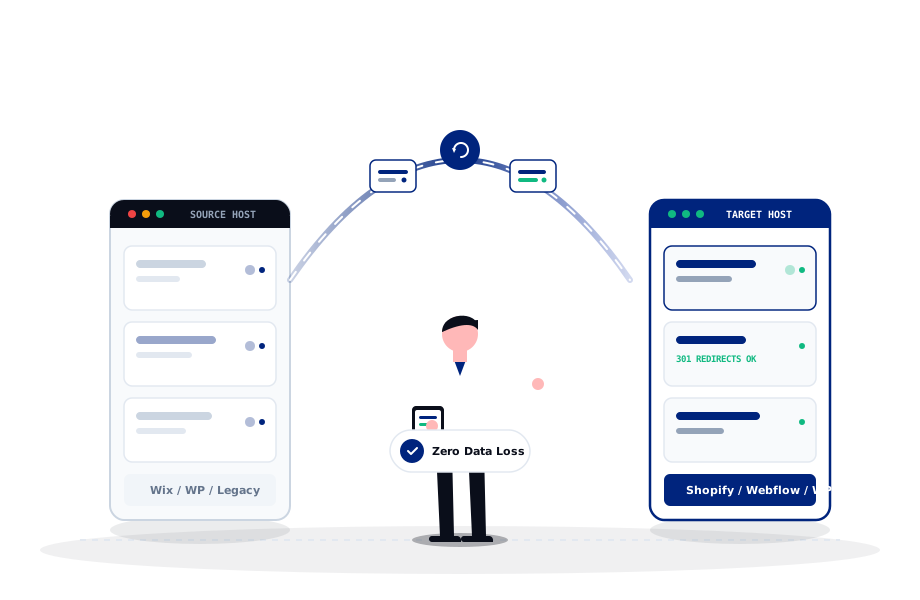
Website Migration Without Unnecessary Disruption
Your website may already be bringing visitors, enquiries and customers to your business.
Even if you're unhappy with its current design or functionality, there may be valuable content and existing search visibility worth protecting.
A migration should take those factors into account.
Moving a website isn't always as simple as copying files from one place to another.
Different platforms store and manage content in different ways.
A WordPress website cannot necessarily be transferred directly into Wix, Webflow or Framer with all its original functionality intact.
Some elements may need to be rebuilt.
Others may need to be replaced with features supported by the new platform.
We review these requirements before recommending an approach.
Our aim is to make the process as organised as possible, with attention to the parts of your website that matter to your business.
Our Website Migration Services
We help businesses with different types of website moves.
Website Platform Migration
If you're changing website platforms, we can help assess what needs to be transferred, rebuilt or replaced. This may involve moving between WordPress, Wix, Shopify, Webflow, Framer or another suitable technology.
WordPress Website Migration
We can discuss moving WordPress websites between hosting providers, domains or development environments. We also help review WordPress migrations to other platforms.
Wix Website Migration
If your business has outgrown its Wix website or wants a different design and development approach, we can help plan the move. The work depends on your existing pages, content and functionality.
Shopify Store Migration
Moving an ecommerce website requires additional care. Product information, collections, customer-facing pages, payment settings and other store requirements need to be considered. We can discuss Shopify migration requirements based on your existing platform and store setup.
Webflow Website Migration
We help businesses review migrations to Webflow, including page rebuilding, content management and relevant SEO requirements.
Framer Website Migration
If you're moving to Framer, we can discuss rebuilding your website, transferring supported content and preparing the new site for launch.
Website Hosting Migration
If you're keeping the same website platform but changing hosting providers, we can discuss the technical requirements for transferring the site.
Domain Migration and Website Transfer
We can help review website moves involving domain changes, DNS configuration and relevant redirects. The exact process depends on your registrar, hosting provider and existing services.
Moving From Wix to WordPress
Wix can be a suitable platform for many business websites.
However, some businesses decide to move to WordPress because their requirements have changed.
You may need different content management options, particular integrations or functionality that better fits a WordPress setup.
Moving from Wix to WordPress usually involves more than a direct transfer.
Page layouts may need to be recreated.
Content may need to be transferred and reorganised.
Forms, booking tools and other features may require alternative solutions.
We can help review:
We'll discuss what can be retained and what needs rebuilding before preparing the project scope.
Moving From WordPress to Wix
Some businesses prefer a managed website platform and want to move away from their current WordPress setup.
Wix may be an option depending on the functionality and content management requirements.
However, WordPress plugins and custom features won't necessarily have direct Wix equivalents.
Before recommending the move, we review the features your business currently uses.
That includes forms, booking tools, ecommerce functionality and other integrations.
If Wix can support the required features, we can discuss how the website should be rebuilt.
If important functionality cannot be reproduced appropriately, we'll explain the limitations.
The goal is to choose a platform that works for your business, not simply move because another platform looks easier to manage.
WordPress Website Migration Services
WordPress websites may need migrating for several reasons.
You could be changing hosting providers, moving to a new domain or replacing an existing WordPress installation.
A migration may involve website files, databases, media, themes, plugins and configuration settings.
We can discuss the requirements for:
WordPress Hosting Transfers
Moving a WordPress website to another hosting environment.
WordPress Domain Changes
Updating the website to use a different domain.
WordPress Website Rebuilds
Replacing an existing website while retaining relevant content and planning URL changes.
WordPress to WordPress Migration
Moving between WordPress environments while considering existing functionality.
WordPress to Another Platform
Reviewing what needs to be rebuilt when moving from WordPress to Wix, Shopify, Webflow, Framer or another platform.
Before making changes, we consider backups, compatibility and the available access to the existing website.
Ecommerce Website Migration Services
Moving an online shop involves more than transferring ordinary website pages.
Your ecommerce website may contain products, categories, customer information, orders and integrations with other services.
These need to be reviewed carefully.
We can discuss migrations involving Shopify, WooCommerce and other ecommerce platforms.
Product Information
Product names, descriptions, images, pricing and variants may need to be transferred.
Product Categories and Collections
The new store should have an appropriate structure for browsing products.
Existing URLs
Product and category URLs may change when moving platforms. We consider redirects where appropriate.
Payment Providers
Payment configuration needs to be reviewed for the new platform.
Shipping and Delivery
Delivery rules, shipping options and related settings may need to be configured again.
Customer Accounts
Account migration capabilities depend on the platforms involved and how customer information is stored.
Order Information
Historical orders may require a separate migration approach or may not transfer in the same way as other data.
Store Integrations
Inventory, fulfilment, accounting and other connected services may need reviewing.
Because ecommerce migrations can affect live sales, the launch process should be planned around the business's operational requirements.
Website Migration With SEO Considerations
One of the biggest concerns when moving a website is what happens to its existing Google visibility.
If your website already appears in search results, you don't want to make unnecessary changes without understanding the consequences.
A migration can affect search performance, particularly when URLs, content or website structure change.
We consider SEO requirements during migration planning.
Reviewing Existing URLs
Before changing the website, it's important to identify relevant existing pages. This helps determine which URLs should remain the same and which may need redirects.
Planning 301 Redirects
When a page moves permanently to a different URL, a 301 redirect can help direct visitors and search engines to the new location. Redirects should point to relevant replacement pages. Sending every old URL to the homepage is not a suitable substitute for proper redirect planning.
Retaining Important Content
Existing service pages and other useful content may contribute to search visibility. We consider what should be retained, updated or replaced.
Reviewing Page Titles and Descriptions
Important SEO metadata may need to be transferred or recreated.
Internal Links
Links between pages should be checked so they point to the correct destinations.
Canonical URLs
Where relevant, canonical settings should reflect the intended pages on the new website.
XML Sitemaps
The new website should have an appropriate sitemap where supported and required.
Indexing Settings
We review relevant settings that could prevent search engines from accessing intended public pages.
Post-Launch Checks
After migration, important pages, redirects and indexing signals should be reviewed.
No agency can guarantee that a website migration will have zero impact on Google rankings. However, careful preparation can help reduce avoidable SEO problems.
Will I Lose My Google Rankings When Migrating My Website?
Not necessarily, but ranking changes are possible.
The level of risk depends on what changes during the migration.
For example, moving a WordPress website to another hosting provider while keeping the same domain, URLs and content is different from completely rebuilding the website on another platform.
A major redesign with new URLs and rewritten content introduces more changes for search engines to process.
Factors that can affect search visibility include:
We review the proposed changes and discuss the relevant risks before migration.
If your existing organic traffic is important to your business, it should be considered from the beginning rather than after the new website launches.
Website Hosting Migration
Sometimes you don't need a new website or a different platform.
You simply need to move your existing website to another hosting provider.
This may be due to cost, support, technical requirements or changes in your business.
Hosting migration can involve transferring website files, databases and configuration settings.
The exact process depends on your platform and hosting environment.
Reviewing the Current Setup
We look at the relevant website technology and hosting requirements.
Preparing the New Environment
The destination hosting needs to support the website.
Transferring Website Data
Relevant files and databases may need to be moved.
Testing the Website
We review important pages and functionality in the new environment where practical.
Updating DNS
The domain may need to be pointed to the new hosting provider.
Checking HTTPS
The new environment should have an appropriate SSL/TLS configuration.
Reviewing Email Dependencies
If your domain is also used for business email, DNS changes need to be planned carefully.
The objective is to complete the move while reducing unnecessary disruption.
Domain Migration and DNS Configuration
Your domain is the address customers use to reach your website.
Changing hosting providers or website platforms often involves updating DNS records.
A domain transfer between registrars is a separate process from changing where a domain points.
We can help review the requirements for both situations.
Domain Connection
Connecting an existing domain to the new website platform or hosting provider.
DNS Records
Reviewing relevant A, AAAA, CNAME, TXT and other records.
Nameserver Changes
Where necessary, updating the domain's nameserver configuration.
SSL and HTTPS
Reviewing certificate and secure connection requirements.
Domain Redirects
Planning redirects when the website moves to a new domain.
Business Email
Checking relevant email-related DNS records before making changes.
Incorrect DNS changes can affect more than the website. That's why it's important to understand which services depend on the domain before updating its configuration.
Changing Your Website Domain
Some businesses change their domain as part of a rebrand or business restructuring.
For example, you may be moving from an older domain to a new business name.
This requires additional planning because existing visitors and search engines may still use the old addresses.
We can discuss:
A domain change can affect organic search performance, so it should be approached carefully.
Where possible, avoid combining unnecessary changes that make migration problems harder to diagnose.
Website Migration vs Website Redesign
A website migration and a website redesign are not the same thing.
However, they often happen together.
Website Migration
A migration focuses on moving a website between platforms, hosting environments or domains.
The main considerations include transferring content, maintaining functionality, managing URLs and preparing the new environment.
Website Redesign
A redesign focuses on changing the website's appearance, structure, content presentation or user experience.
Combining Both Projects
You may decide to redesign your website while moving to a new platform.
This can be practical, but it increases the number of changes involved.
We can help define which elements are part of the migration and which are part of the redesign.
That makes the project scope clearer and helps identify areas that require additional attention.
What Can Be Migrated to a New Website?
The answer depends on the existing platform and the destination platform.
Some information can be transferred directly. Other elements may need to be recreated.
Common migration requirements include:
Website Pages
Existing text, images and page information.
Blog Content
Articles, categories and relevant metadata.
Images and Media
Website images and other supported media files.
Navigation
Menus and links between pages.
Forms
Contact forms and other data collection features.
SEO Metadata
Page titles, descriptions and other relevant settings.
Ecommerce Information
Products, collections and supported store data.
Integrations
Connections with external services.
Custom Functionality
Features that may require rebuilding or replacing.
We review the existing website before confirming which elements can be transferred and how.
How We Prepare a Website for Migration
A successful migration starts before the new website goes live.
We consider several areas during preparation.
Existing Website Review
We look at the current platform, important pages and functionality.
Content Inventory
We identify relevant content that needs to be retained, updated or replaced.
URL Mapping
Where URLs are changing, we plan appropriate destination pages.
Functionality Review
We identify forms, booking systems, ecommerce features and integrations that need attention.
Domain and Hosting Review
We discuss the existing technical setup and relevant access requirements.
Backup Planning
Where supported, we consider suitable backups or other recovery arrangements before making changes.
Testing Requirements
We identify important user journeys that should be checked before launch.
Launch Planning
We discuss how and when the new website should replace the existing one.
The level of preparation depends on the size and complexity of the website.
Our Website Migration Process
We follow a structured approach based on the requirements of each project.
Tell Us About Your Existing Website
We start by understanding your current platform, website address and reason for moving. We also discuss any problems you're experiencing.
Review the Migration Requirements
We look at the content, functionality, integrations and technical setup that may be affected.
Recommend an Approach
We discuss the available options and explain whether the website can be transferred, needs rebuilding or requires a combination of both.
Plan the Migration
We define the agreed scope, including content transfer, URL handling, domain configuration and relevant testing.
Prepare the New Website
We carry out the agreed development, transfer or configuration work.
Test Before Launch
We review important pages, navigation, forms and other agreed functionality.
Launch the New Website
Once the website is approved, we complete the agreed launch steps.
Review After Migration
We check relevant functionality and technical settings following the move. Any extended monitoring or support requirements can be agreed separately.
Common Website Migration Problems
Businesses sometimes contact us after attempting a migration and discovering that something isn't working properly.
Some common issues include:
Broken Links
Old URLs no longer lead to the correct pages.
Missing Content
Pages, images or other information weren't transferred.
Contact Forms Not Working
Enquiries aren't being submitted or delivered correctly.
Website Not Loading
Domain, hosting or configuration issues prevent the site from opening.
HTTPS Errors
The website has certificate or secure connection problems.
Email Problems
DNS changes have affected email-related records.
Missing SEO Settings
Important metadata, redirects or indexing settings weren't carried over.
Features That No Longer Work
The new platform doesn't support functionality from the old website in the same way.
If you've already migrated and are experiencing problems, we can review the issue and discuss suitable fixes.
How Much Does Website Migration Cost in the UK?
The cost depends on the type of migration and the amount of work involved.
Moving a straightforward WordPress website between compatible hosting providers is different from rebuilding a large ecommerce website on Shopify.
Factors that affect the price include:
At DOT IT, website migration projects are quoted individually.
We'll review your current website and discuss what needs to move before preparing a quotation.
Additional costs may include hosting, domain registration, platform subscriptions and paid third-party tools.
These are separate from our development fees unless included in the agreed scope.
Ongoing support is also quoted separately.
Why Choose DOT IT for Website Migration?
Experience Across Different Website Platforms
We work with WordPress, Wix, Shopify, Webflow, Framer and custom website technologies. This helps us assess the requirements of moving between different systems.
We Review the Existing Website First
We don't assume every website can be transferred directly. We look at the content and functionality before recommending an approach.
SEO Considerations Are Part of Planning
We consider important URLs, redirects, metadata and indexing requirements when relevant to the migration.
Design and Development Support
If your migration also requires a website redesign or new functionality, we can discuss that work as part of the project.
Clear Communication
We explain the process and relevant technical decisions without unnecessary jargon.
Practical Launch Planning
We consider the domain, hosting and functionality requirements before replacing the live website.
Support After Migration
If you need further improvements or technical support, we can discuss an appropriate arrangement.
What Our Clients Say
Hear from businesses that trust DOT IT to power their growth.
Sayyid Aliraza Naqvi
Website, Branding
Gazi Varteji
Website Design, Devlopment
Thanushan
UI/UX, Web Devlopment
Leah Zimmerman
Website Devlopment
Robert
Website Devlopment
Kelly Roberts
Website + Lead Genration
Samrendra Srivastava
Video Creation
Sayyid Aliraza Naqvi
Website, Branding
Gazi Varteji
Website Design, Devlopment
Thanushan
UI/UX, Web Devlopment
Leah Zimmerman
Website Devlopment
Robert
Website Devlopment
Kelly Roberts
Website + Lead Genration
Samrendra Srivastava
Video Creation
Sayyid Aliraza Naqvi
Website, Branding
Gazi Varteji
Website Design, Devlopment
Thanushan
UI/UX, Web Devlopment
Leah Zimmerman
Website Devlopment
Robert
Website Devlopment
Kelly Roberts
Website + Lead Genration
Samrendra Srivastava
Video Creation
Frequently Asked Questions About Website Migration
Planning to Move Your Website?
Whether you're switching from Wix to WordPress, moving an ecommerce store to Shopify, changing hosting providers or launching a redesigned website, we can help you plan the process.
Tell us your current website address, where you want to move and what you need to keep.
We'll review your requirements and explain the available options before preparing a quote.
Website migration, platform transfers and technical website support for businesses across the UK.